
When most people think about developed, first-world countries contributing to climate change, they think of the United States and China, but Russia should be at the top of that list as well. With its 17.1 million square kilometers, it is the biggest country in the world. With it being the geographically largest country in the world, it the the fifth-largest emitter of greenhouse gases.
EMISSIONS
Russia’s CO2 emissions are 11.48 metric tons per capita on average.
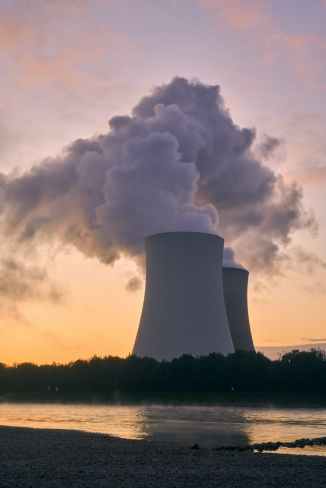
However, Russia’s methane emissions account for 2 percent of all global greenhouse gases, the equivalent of emissions from global aviation, which is a huge amount.
Russia is a huge petroleum state. It is the second-largest exporter of oil in the world, Saudi Arabia being the first, and it is the largest exporter of natural gas. Politicians have said that they were thinking of reducing their extraction and use of fossil fuels, but since the U.S. said that they were thinking of increasing their use of fossil fuels, it is doubtful that Russia will cut back.
CLIMATE CHANGE EFFECTS
Russia has experienced flooding and storms that are climate related, but their efforts to lower their emissions have not been impacted. Around 10 million of the country’s residents are at chance to face immediate climate-related risks.
In southeastern Siberia, forest fires have repeatedly destroyed settlements with thousands of local residents evacuated and relocated.
The global climate crisis also has highly negative impacts for Russia, with more disasters to come. “For years there was a public image that climate change only meant rising temperatures, butnow we see that it is much more about unexpected natural disasters happening in various parts of the country,” says Nikolay Gudkov, the spokesman for Russia’s Ministry of Natural Resources.
The average temperature in Russia in 2016 grew 2.5 times quicker than the global average. Both 2015 and 2016 were the warmest years in Russia since the beginning of meteorological observations.
Sergey Donskoy, Russia’s environment minister, has said that the negative effects of climate change are already costing the country 30 to 60 billion rubles ($530 million to $1 billion) yearly.
SOLUTIONS
Researchers and environmentalists have called for both federal and regional strategies to adapt to the growing problems to be drafted soon. The country has plans to develop and approve a national adaptation plan by mid-2018, as part of its plan to ratify the Paris Agreement on climate change. So far just six of 85 regions in Russia – including Moscow and St. Petersburg – are working on regional climate adaptation strategies. Researchers say Russia will need to modernize its infrastructure – including its drainage systems – to deal with problems such as increasingly heavy rain.
Before the U.S. pulled out of the Paris Climate Agreement, Russia was the only major emitter that hadn’t signed it. Vladimir Chuprov, head of the energy unit at Greenpeace Russia, says the ratification question “is about whether Russia is ready to go green or not, phase out fossil fuels or not.” And with the United States pulling out of the Paris Agreement, it gives Russia an even stronger argument as to why they are taking so long in. Russia is slowly learning that fossil fuels are a key factor in propelling climate change. Further, it is coming to grips with the fact that pegging its economy to oil and gas exposes the country to great swings in fortune as prices of those commodities rise and fall.
Their national strategy is one of the weakest plans ever submitted to reduce emissions. In fact, it allows Russia’s carbon emissions to increase over time. Under the Paris accord, Russia’s plan to cut greenhouse gases calls for reducing emissions by 25 to 30 percent from 1990 levels by 2020. But 1990 was a relatively high mark for Russia’s emissions. Starting in 1991, the dissolution of the Soviet Union and the collapse of Russian industry produced a steep drop in emissions.
It appears unlikely that Russia will rein in emissions or the expansion of the oil and gas industry, which contributes about half the revenues to the domestic budget. Oil production on land is falling, so Russia is looking to tap the vast petroleum and gas reserves offshore in the Arctic.
This video is an example of how climate change is affecting Russian people’s lives, local businesses, and the natural landscape of the country.
 Marissa Marietta